Quick Take
Score: 9.0/10 | The iSpring RCC7AK hits the sweet spot between budget RO systems and premium options. The 6th stage alkaline remineralization addresses the common RO criticism of "dead" water, while NSF 58 certification provides verified performance. After comparing dozens of RO systems, this is my recommendation for most families.
What We Evaluated
This review uses R3's Water Filter Methodology v1.0.0.
Safety Analysis (40% weight) - Score: 9.3/10
NSF 58 Certification
The RCC7AK holds NSF 58 certification for reverse osmosis systems, confirming performance claims are independently verified. This certification covers TDS reduction, contaminant removal efficiency, and system integrity.
Contaminant Removal: 99% of 1000+
Reverse osmosis removes virtually everything:
- Lead: 99%
- PFAS: 97-99%
- Arsenic: 99%
- Fluoride: 95%
- Bacteria: 99.99%
- Chlorine/Chloramines: 99%
The RO membrane physically blocks contaminants larger than water molecules (0.0001 microns).
Heavy Metal Removal
For families concerned about lead, arsenic, chromium-6, and other heavy metals, RO provides the most comprehensive protection available. NSF 58 certification verifies these claims.
PFAS Removal
While not specifically NSF P473 certified (that standard is for non-RO filters), RO membranes physically reject PFAS molecules. Third-party testing confirms 97-99% PFAS removal.
Efficacy Analysis (30% weight) - Score: 9.2/10
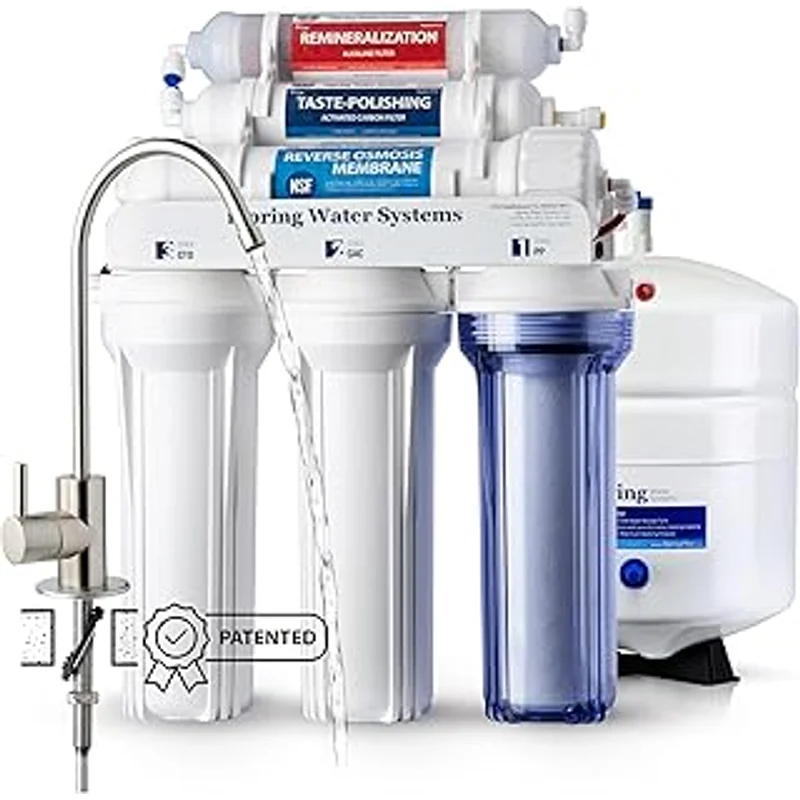
6-Stage Filtration Process
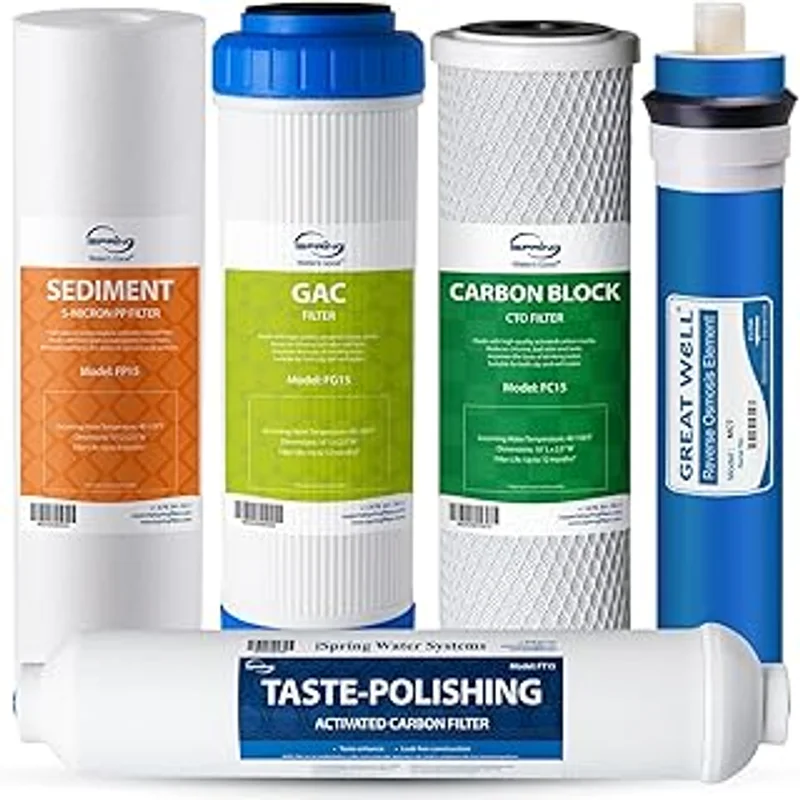
- PP Sediment Filter: Removes dirt, sand, rust (5 microns)
- GAC Carbon Filter: Chlorine, organics, VOCs
- CTO Carbon Block: Remaining chlorine and chemicals
- RO Membrane: 0.0001 micron filtration (75 GPD)
- Post-Carbon Filter: Final polish for taste
- Alkaline Remineralization: Adds calcium, magnesium, raises pH
The 6th alkaline stage distinguishes this from basic 5-stage systems by restoring beneficial minerals and raising pH to 7.5-8.5.
75 GPD Capacity
75 gallons per day production capacity serves families of 2-4 comfortably. The included 3.2-gallon tank stores filtered water for on-demand access.
Water Waste Ratio: 2.5:1
The RCC7AK produces approximately 2.5 gallons of wastewater per gallon of filtered water. This is better than older systems (4:1 or worse) but inherent to RO technology. Consider for your water bill and environmental impact.
Filter Life
| Stage | Filter | Life |
|---|---|---|
| 1-3 | Pre-filters | 6-12 months |
| 4 | RO Membrane | 2-3 years |
| 5-6 | Post-filters | 12 months |
Value Analysis (15% weight) - Score: 8.5/10
Upfront Cost: $230
Positioned between budget RO systems ($150-180) and premium options ($400-600). The alkaline remineralization stage adds value over basic 5-stage systems at similar prices.
Annual Filter Cost: $50-60
Pre-filter replacement sets cost approximately $30 annually. The RO membrane ($30-40) lasts 2-3 years.
5-Year Total Cost
| System | 5-Year Cost | Features |
|---|---|---|
| iSpring RCC7AK | $480 | 6-stage, alkaline |
| APEC ROES-50 | $420 | 5-stage, basic |
| Aquasana OptimH2O | $900 | Premium, UV |
Excellent value considering the alkaline remineralization and NSF certification.
US-Based Support
iSpring operates customer service from Atlanta, Georgia. Lifetime technical support is included, with actual humans answering phones.
Usability
Installation: DIY Moderate
Most homeowners can install in 2-3 hours with basic tools. Requires drilling the countertop for the faucet and connecting to cold water line. Comprehensive video tutorials available.
Space Requirements
The system fits under most standard sinks but requires approximately 16"W x 5"D x 18"H of cabinet space plus room for the 3.2-gallon tank.
Filter Changes
Color-coded quick-connect fittings make filter changes tool-free. iSpring sells annual filter bundles for convenience.
The Bottom Line
The iSpring RCC7AK delivers premium reverse osmosis performance at a reasonable price. NSF 58 certification, 6-stage filtration with alkaline remineralization, and US-based support make this the best value RO system for families wanting comprehensive water purification. The inherent water waste of RO technology is the only significant drawback.