Quick Take
The PlanetBox Rover earns our top recommendation for families who want the safest possible food storage for their kids. At $60-80 depending on configuration, it costs more than plastic alternatives, but the 304 food-grade stainless steel construction means zero concern about chemicals leaching into your child's lunch. After three school years with ours, it still looks nearly new.
Overall Score: 8.7/10 - Best for safety-conscious families
What We Evaluated
This review uses R3's school essentials methodology v1.0.0, evaluating across safety (35%), efficacy (25%), value (20%), usability (15%), and sustainability (5%).
Safety Analysis (35% weight) - Score: 9.5/10
Material Excellence: The entire food-contact surface is 304 stainless steel, the same grade used in commercial kitchens and surgical equipment. This matters because:
- Zero BPA, BPS, or any bisphenols (no plastic at all)
- Zero phthalates (used only in flexible plastics)
- Lead-free verified through independent testing
- No PFAS coatings (some lunch bags use these for water resistance)
Why Stainless Steel?: Unlike plastics that can leach chemicals especially when heated or scratched, stainless steel is inert. It does not interact with food, even acidic items like tomatoes or citrus.
Third-Party Testing: PlanetBox publishes independent lab results verifying lead-free status. The Center for Environmental Health has not flagged this brand, unlike several popular lunch bags.
The only safety deduction is the silicone seal on the optional dippers, though food-grade silicone is generally considered safe.
Performance & Efficacy (25% weight) - Score: 8.8/10
Durability: This is where the PlanetBox shines. After three years of daily school use - drops, backpack compression, dishwasher cycles - our Rover shows only minor scratches on the exterior. The latches still click firmly. This is not a product you replace annually.
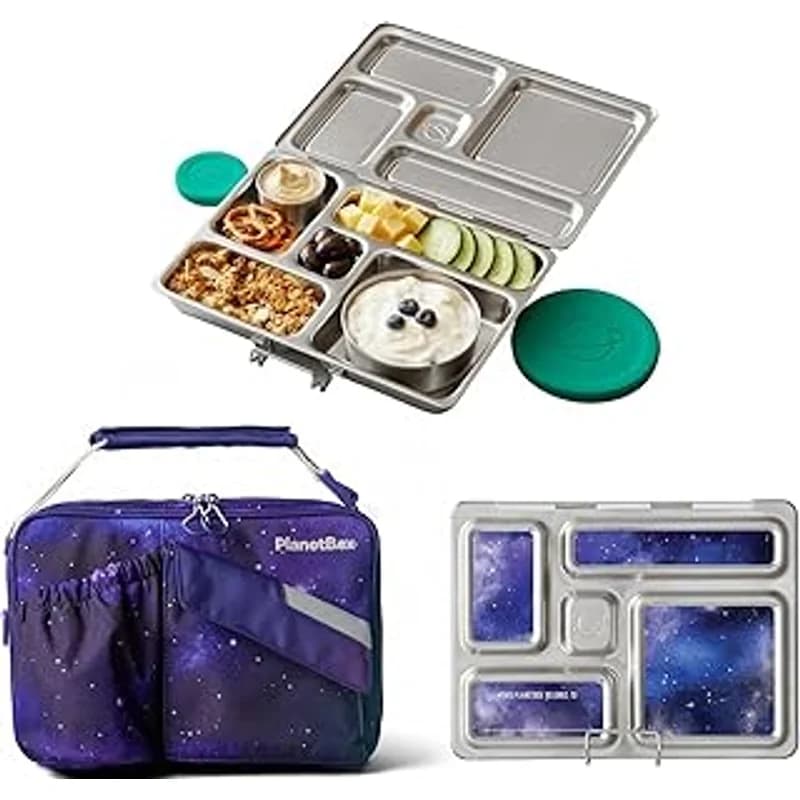
Compartment Design: The Rover features 5 fixed compartments:
- 1 large section for sandwiches or mains
- 2 medium sections for sides
- 2 small sections for treats or dips
The fixed compartments prevent any cross-contamination but mean you cannot adjust sizes. For families who pack similar lunches daily, this consistency is actually a benefit.
What It Does Not Do: The Rover itself provides no insulation. It keeps foods separated, not temperature-controlled. You need the carrying bag with an ice pack for cold items, or a separate thermos for hot foods. This is the main efficacy limitation.
Value Assessment (20% weight) - Score: 7.5/10
Price Reality: At $60-80 for a complete set (bento + bag + dippers), PlanetBox is premium-priced. However:
- 5+ year lifespan: Our third year in, zero repairs needed
- Replacement parts available: Lost a latch? Buy just the latch for $3
- Sibling handoff: Our older child's Rover will go to the younger one
- Cost per year: $60 / 5 years = $12/year vs $20/year for annual plastic replacement
Complete Set Contents: The Rover Complete set ($70-80) includes:
- Stainless steel bento box
- Carrying bag with adjustable strap
- 2 leak-proof dippers (silicone-topped containers for dips)
- Dipper magnets (hold dippers in place)
- Personalization magnets
Warranty: 5-year warranty covers manufacturing defects. Excellent customer service reputation based on community feedback.
Usability (15% weight) - Score: 8.2/10
Kid-Friendly Operation: The single latch requires moderate pressure - kindergartners may need practice, but by first grade most kids handle it easily. This is actually safer than flimsy latches that pop open in backpacks.
Cleaning: Hand wash recommended to preserve finish, though it survives the dishwasher. The smooth stainless steel wipes clean easily with no crevices for food to hide. Significant improvement over textured plastic containers.
Weight: At 16oz empty, it is heavier than plastic alternatives. For kindergartners with small backpacks, consider this factor. By elementary school, the weight is not an issue.
Size: 10.5" x 7.5" x 2" fits most standard backpacks. Measure yours if uncertain.
Sustainability (5% weight) - Score: 9.5/10
Recyclability: Stainless steel is 100% recyclable and retains value. When this lunchbox eventually reaches end of life (likely 10+ years from now), it can be fully recycled.
Brand Practices: PlanetBox is a certified B-Corp. They use recycled cardboard packaging, carbon neutral shipping, and have genuine sustainability commitments beyond marketing.
Single-Use Reduction: The compartmentalized design eliminates the need for plastic baggies, saving hundreds per year per child.
Who This Is For
Best For:
- Families prioritizing chemical-free food storage above all else
- Parents willing to invest upfront for long-term value
- Homes with multiple children who can share/hand down
- Eco-conscious families wanting sustainable materials
- Kids who eat similar lunches daily (fixed compartments work well)
Skip If:
- Budget is the primary constraint (see Bentgo Kids for BPA-free at lower cost)
- You need built-in temperature control (consider OmieBox)
- Your child needs adjustable compartment sizes daily
- You have a kindergartner who struggles with latches
The Bottom Line
The PlanetBox Rover is the lunchbox I recommend when parents ask about the safest option for their kids. The all-stainless-steel construction eliminates chemical concerns entirely, and the durability means you buy it once and use it for years.
Yes, the price is premium. But when I calculate the true cost - $12/year for 5+ years of chemical-free daily use, with replacement parts available and a warranty that matters - it represents genuine value for families who prioritize safety.
Final Score: 8.7/10 - Our Top Pick
Research Sources
- PlanetBox official product specifications and lab testing results
- Center for Environmental Health lunch bag lead testing reports
- Mamavation lunchbox PFAS testing
- r/BuyItForLife long-term durability discussions
- r/Parenting lunchbox recommendations
- Consumer Reports plastic safety guidelines
- Personal testing over 3 school years