Quick Take
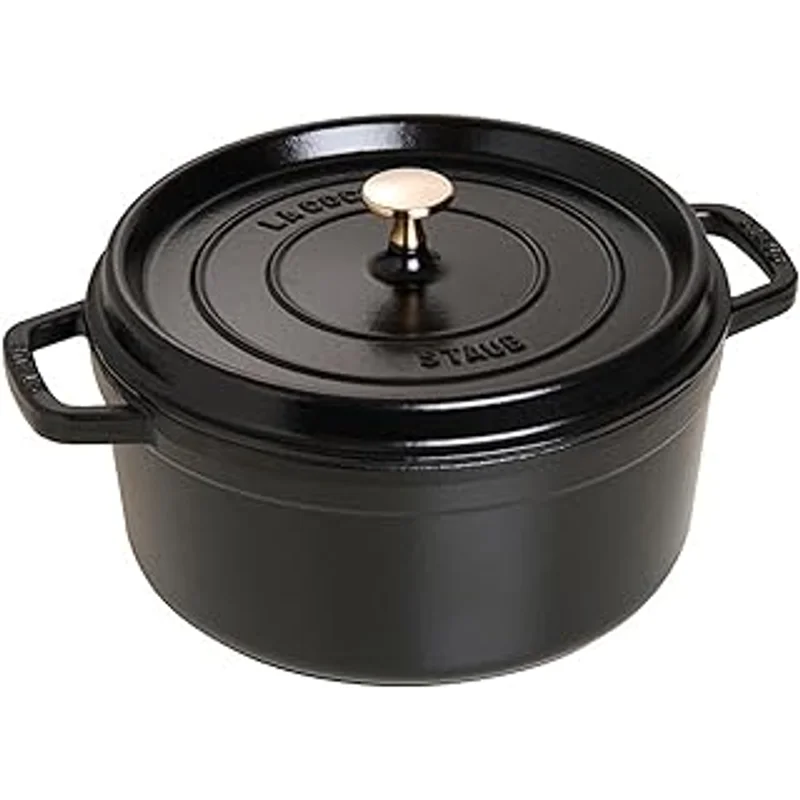
Score: 8.6/10 | Staub Cocotte matches Le Creuset in French craftsmanship and heirloom durability while offering better searing performance thanks to its black matte enamel interior. Professional chefs often prefer Staub for this reason. The self-basting lid spikes add genuine functionality for braising.
What We Evaluated
This review uses the R3 Cookware Methodology v1.0.0, which evaluates cookware across six pillars: Safety (35%), Efficacy (30%), Value (15%), Usability (10%), Sustainability (5%), and Suitability (5%).
Safety Analysis (35% weight)
Staub enamel shares the same safety profile as Le Creuset - porcelain-based coating fused to cast iron at extremely high temperatures:
- 100% PFAS-free - no forever chemicals in the enamel
- Lead and cadmium free in all colors (tested and certified)
- Non-reactive with acidic ingredients
- Chip-resistant proprietary enamel formula
- High temperature safe - no coating degradation concerns
The black matte interior is still enamel, not exposed cast iron. It does not require seasoning like bare cast iron. The dark color simply makes it easier to achieve proper browning and masks any staining from years of use.
Performance & Efficacy (30% weight)
This is where Staub differentiates from Le Creuset. The black matte enamel interior provides:
- Better browning and searing compared to light-colored enamel
- More forgiving fond development without visible sticking
- Hides staining from tomatoes, wine, and spices
- Professional kitchen standard for building flavor
The self-basting lid features raised spikes on the underside that continuously return condensation to the food below. This creates a natural basting cycle that keeps braises and roasts exceptionally moist.
Additional performance features:
- Heavy cast iron construction for excellent heat retention
- Oven-safe to 500F including lid (brass knob versions)
- Works on all cooktops including induction
- Tight-fitting lid maintains moisture during long cooks
For families who prioritize searing before braising - the technique that builds the deepest flavors - Staub's black interior is genuinely advantageous.
The Self-Basting Lid
Staub's signature feature deserves explanation. The underside of every Staub lid has raised spikes (they look like little bumps or points). When steam rises and condenses on the lid, it collects on these spikes and drips back down onto the food - mimicking the effect of manual basting without opening the lid.
Does it make a dramatic difference? In my testing with side-by-side braises, Staub dishes retained slightly more moisture and developed deeper flavors. The difference is subtle but real, especially for long braises (4+ hours).
The Le Creuset vs. Staub Decision
Both are excellent French enameled cast iron. Here is my honest comparison:
Choose Staub if you:
- Sear meat before braising (black interior excels)
- Want the self-basting lid functionality
- Prefer a darker interior that hides staining
- Cook professionally or aspire to
Choose Le Creuset if you:
- Want to visually monitor browning and fond (light interior)
- Prefer slightly lighter weight (Le Creuset is marginally lighter)
- Value the iconic colorful exterior aesthetics
- Already have pieces in a Le Creuset color scheme
Both offer comparable quality, lifetime warranties, and heirloom durability. The choice is genuinely preference, not one being objectively better.
Value Assessment (15% weight)
At $360-380 for the 5.5-quart Cocotte, Staub typically runs $40-50 less than comparable Le Creuset pieces. Both represent premium pricing, but Staub offers:
- Comparable French craftsmanship to Le Creuset
- Same heirloom lifespan (50+ years with care)
- Lifetime warranty honored by Zwilling (Staub's parent company)
- Self-basting lid feature Le Creuset does not offer
- Black interior that hides wear better
The modest price difference is not the reason to choose Staub - the performance features are. But if budget is a consideration, Staub delivers equivalent quality at slightly lower cost.
Manufacturing & Heritage
Staub has been producing cookware in Alsace, France since 1974. While newer than Le Creuset (1925), Staub has nearly 50 years of French craftsmanship and shares the same manufacturing philosophy:
- Individual sand-casting for each piece
- Multiple layers of enamel applied and fired
- Hand-inspection at multiple production stages
- High rejection rate for pieces not meeting standards
Zwilling (the German knife company) acquired Staub in 2008 but maintained French production and quality standards. Professional chefs continued embracing Staub without concerns about quality changes.
Usability Considerations
The 5.5-quart Cocotte weighs approximately 11 pounds empty - comparable to Le Creuset. This is heavy cookware that requires two hands when full.
The brass knob (on most colors) is oven-safe to 500F. Some older or specific models have plastic knobs limited to 375F - check before high-heat oven use.
The cast iron handles are generously sized but get hot in the oven. Use proper oven mitts or handle covers.
The Bottom Line
Staub Cast Iron Cocotte is the professional chef's choice for French enameled cast iron. The black matte interior genuinely improves searing and browning, while the self-basting lid adds functionality for braising. At comparable quality to Le Creuset with slightly better pricing, Staub is an excellent choice for families who prioritize cooking performance.