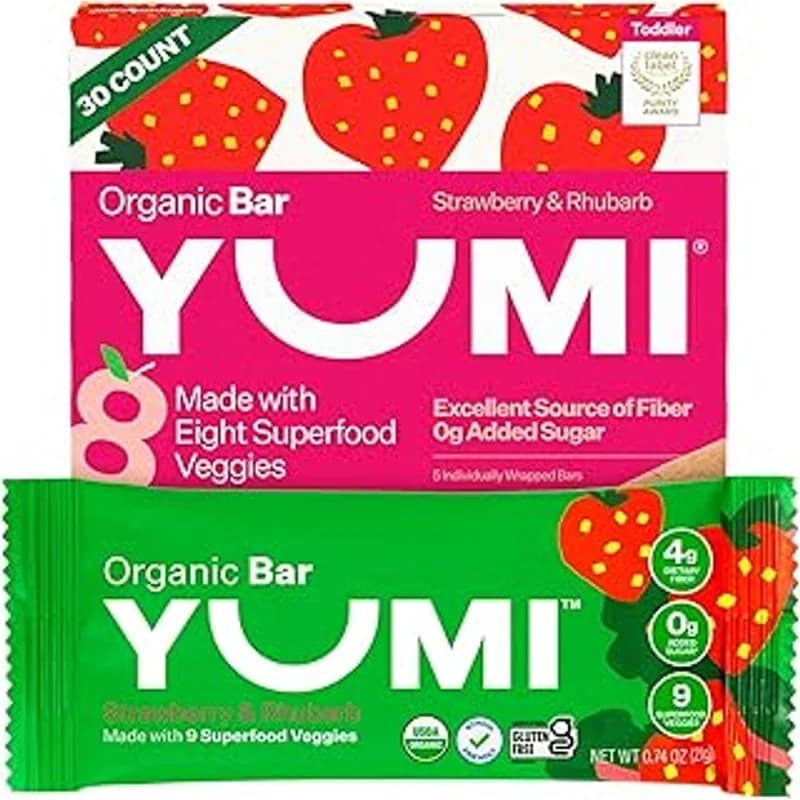
When Yumi launched, they made a bold claim: vegetables as the first ingredient in baby snacks. Most "veggie" snacks bury the vegetables after several forms of processed grains. Yumi actually delivers on the promise.
Why First Ingredient Matters
Food labels list ingredients by weight. Whatever's first is what you're getting most of. Compare:
Typical "veggie" puff: Rice flour, vegetable powder, sugar... Yumi: Carrot, brown rice flour, coconut oil...
The difference is significant. When vegetables are first, babies are actually eating vegetables - not processed grains with vegetable flavoring.
The Yumi Philosophy
Yumi started as a fresh baby food delivery company, developed with pediatricians and nutritionists. Their snacks apply the same philosophy: real food ingredients, no added sugars, no artificial anything.
Their "Veggie Sticks" and "Puffs" lines both lead with vegetables: sweet potato, carrot, kale, beet, or spinach depending on variety. The processing is minimal compared to conventional puffs.
Nutritional Reality Check
Each serving of Yumi Veggie Sticks provides:
- Calories: 30
- Protein: <1g
- Fiber: 1g
- Sugar: 0g
- Sodium: 0mg
No added sugar. Zero. That's increasingly rare in baby snacks, where even "organic" brands often add fruit juice concentrate or sugar under other names.
The protein and fiber are modest - these aren't meal replacements. They're intended as snacks for developing eaters, helping babies explore textures and flavors.
My Testing Experience
I discovered Yumi when my youngest was 9 months old. She immediately took to the dissolving texture - these melt safely in the mouth, which is essential for new eaters still developing chewing skills.
The vegetable flavor is real but not overwhelming. My daughter actually preferred the carrot and sweet potato varieties over the spinach (which has a stronger green taste). Older siblings were less interested - these are really designed for the 8-14 month window.
Safety Considerations
For baby snacks, safety goes beyond ingredients. Yumi's dissolving texture is crucial:
- Melt-in-mouth design reduces choking risk
- Size appropriate for small hands and mouths
- No hard pieces or chunks
They're USDA Organic, which matters more for babies whose developing systems are more vulnerable to pesticide exposure. Non-GMO Project Verified as well.
The Allergen Picture
Yumi snacks are free from the top 8 allergens - no milk, eggs, peanuts, tree nuts, wheat, soy, fish, or shellfish. For families introducing allergens carefully or managing existing allergies, this simplifies things.
Some varieties contain coconut (a tree nut in FDA classification but rarely an allergen in practice). Check individual product labels if coconut is a concern.
Value Assessment
At $7.99 for a 6-pack (~$1.33/container), Yumi is premium-priced compared to conventional baby puffs. Gerber Organic Puffs run about $0.50/container in bulk.
You're paying for:
- Vegetables actually first in ingredients
- Zero added sugar (not just "low sugar")
- Pediatrician-developed formulation
- Premium sourcing standards
For 6-12 months of baby snacking, the cost difference is meaningful but not massive. Once kids transition to regular snacks, you're not locked into premium baby pricing forever.
Availability Challenges
Yumi isn't everywhere. Find them at:
- Whole Foods (most reliable)
- Sprouts
- Some Target locations
- Amazon
- Direct from Yumi website
This isn't a "grab it anywhere" option. Plan ahead and stock up when you find them.
Who Should Buy This
Families starting solids who want clean, vegetable-first snacks. Parents concerned about added sugars in baby foods. Those who can afford the premium and have access to specialty grocery stores.
Who Should Skip This
Budget-focused families - Gerber Organic offers 80% of the benefit at 60% of the cost. Households without access to Whole Foods or specialty stores. Parents of toddlers 18+ months who have graduated to regular kids snacks.
The Verdict
Yumi Organic Veggie Snacks deliver what most baby snacks only promise: actual vegetables as the primary ingredient with zero added sugar. For the critical 8-14 month window when babies are forming taste preferences, introducing real vegetable flavors has lasting value. The premium pricing is justified by ingredient quality - just don't expect to find them at every grocery store.