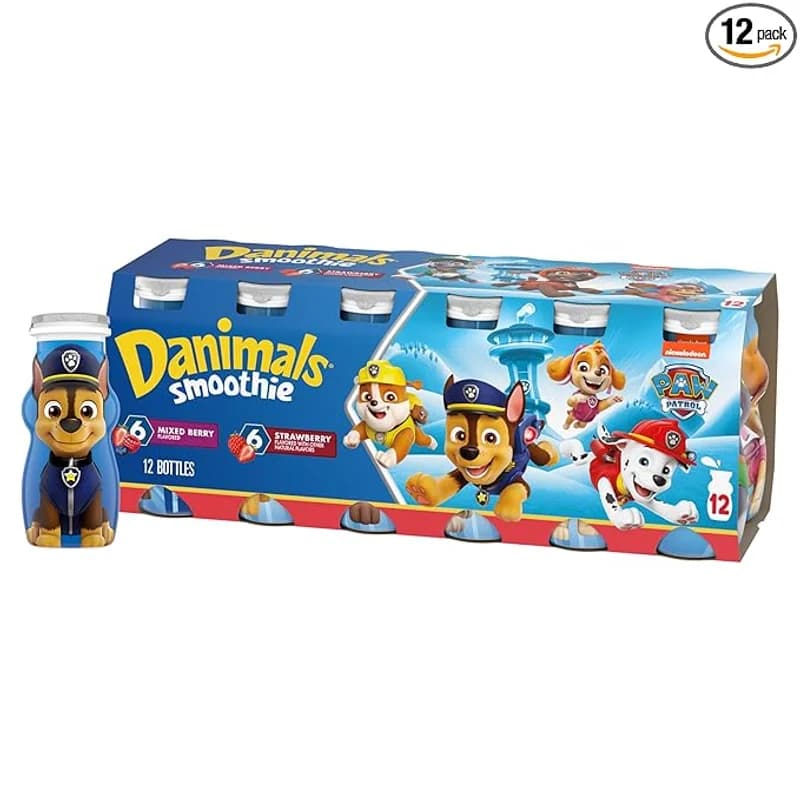
Danimals dominates grocery store shelf space with character licensing and kid-targeted marketing. But when you flip the bottle and read the ingredients, the appeal fades fast.
The Marketing Reality Gap
Danimals positions itself as a healthy kids' snack with messaging like:
- "Good source of Calcium and Vitamin D"
- "No artificial colors"
- "Made with real fruit"
These claims are technically true but miss the bigger picture of overall product quality.
Ingredient Analysis
Danimals Strawberry Smoothie: Cultured Grade A Low Fat Milk, Sugar, Water, Fructose, Modified Food Starch, Natural Flavor, Carrageenan, Vitamin D3, Mixed Tocopherols (to maintain freshness).
Red flags:
- Sugar + Fructose: Two sweeteners, totaling 9g per bottle
- Carrageenan: Controversial additive linked to gut inflammation in some studies
- Modified food starch: Processed thickener (not harmful but not whole-food)
- Natural flavor: Vague term that could mean many things
Noticeably absent: actual fruit on the ingredient list despite "made with real fruit" claims. The "fruit" comes from "natural flavor" rather than recognizable fruit pieces.
Nutritional Profile
Per bottle:
- 3g protein - standard for drinkable yogurt
- 9g sugar - higher than Stonyfield or Siggi's
- 10% calcium - from milk, legitimately helpful
- 10% Vitamin D - added fortification
- No fiber - liquid format
The fortification with Vitamin D is genuinely beneficial for kids' bone development. But you can get that benefit from many sources without the sugar and additives.
Carrageenan Concerns
Carrageenan is a seaweed-derived thickener that's controversial in food research:
- Some studies in the Journal of Environmental Science and Health linked carrageenan to intestinal inflammation
- The Cornucopia Institute petitioned to remove carrageenan from organic food standards
- Counter-argument: food-grade carrageenan differs from degraded carrageenan used in studies
The evidence isn't conclusive enough to call carrageenan definitively harmful, but many clean-eating advocates choose to avoid it. Stonyfield and Siggi's achieve similar texture without it.
Comparison to Clean Alternatives
| Factor | Danimals | Stonyfield YoKids |
|---|---|---|
| Sugar | 9g | 7g |
| Organic | No | Yes |
| Carrageenan | Yes | No |
| Artificial flavors | Yes (natural flavor) | No (organic natural) |
| Real fruit | Flavor only | Actual fruit |
| Price/unit | ~$0.83 | ~$0.75 |
Stonyfield delivers cleaner ingredients at lower cost. The Danimals premium goes to marketing, not quality.
The Character Licensing Tax
Danimals pays for licenses featuring popular characters (currently includes Jurassic World, Frozen, etc.). This marketing cost passes to consumers while adding zero nutritional value.
Your kids might want Danimals because of the dinosaur on the bottle, not because the product is better. Consider whether character appeal is worth the ingredient trade-offs.
Value Assessment
At $4.99 for a 6-pack (~$0.83/bottle), Danimals costs more than cleaner alternatives:
- Stonyfield YoKids: ~$0.75/tube (less sugar, organic)
- Siggi's Kids: ~$0.81/tube (much less sugar, more protein)
You're paying extra for character licensing and marketing, not for better ingredients.
Who Might Still Choose Danimals
Families where character appeal overcomes ingredient concerns. Extremely picky eaters who refuse other yogurt brands. Situations where Danimals is the only option available.
Better Alternatives
Stonyfield YoKids ($0.75): Organic, 7g sugar, real fruit, no carrageenan Siggi's Kids ($0.81): 5g sugar, 5g protein, simple ingredients Go-Gurt (plain varieties): Cheaper option if avoiding organic
The Verdict
Danimals Smoothies earn a below-average score because cleaner alternatives exist at similar or lower prices. The 9g sugar, carrageenan, vague "natural flavors," and marketing-over-substance approach don't justify the cost when Stonyfield and Siggi's deliver better nutrition for kids who'll actually eat them.