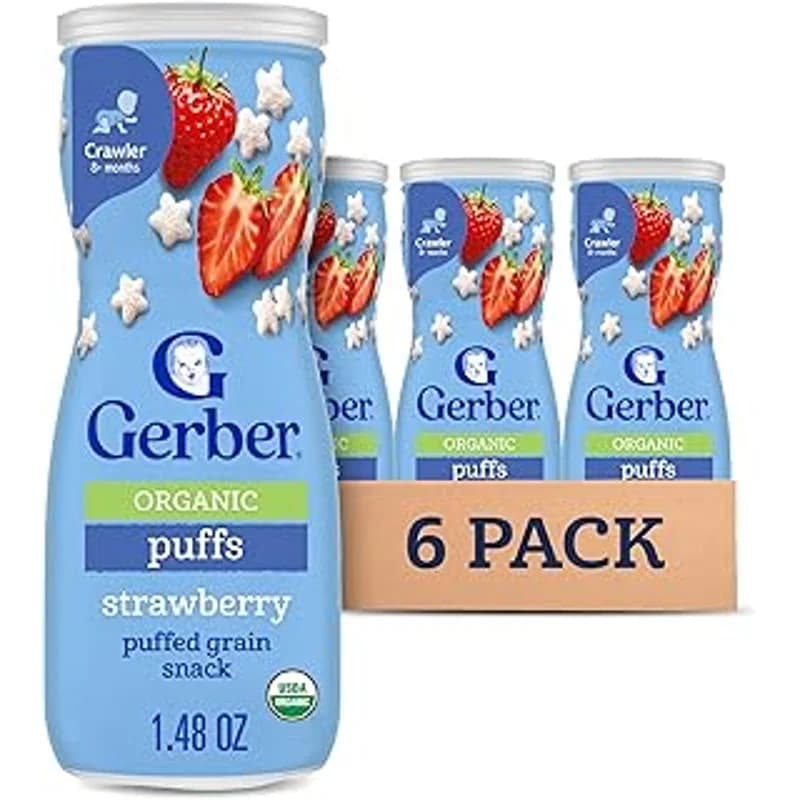
Gerber dominates the baby food aisle, and their Organic Puffs represent an accessible entry point to organic baby snacks. Let's examine whether the organic label justifies choosing these over conventional Gerber Puffs.
The Gerber Context
Gerber is owned by Nestle - the world's largest food company. This means massive distribution (everywhere), economies of scale (lower prices), but also corporate priorities that may differ from pure nutrition brands.
Their Organic line launched in response to demand for cleaner baby food. It uses USDA Organic ingredients but maintains Gerber's approach to taste appeal.
Ingredient Analysis
Gerber Organic Puffs contain:
- Organic whole wheat flour
- Organic rice flour
- Organic whole grain oat flour
- Organic cane sugar
- Organic banana puree
- Organic palm oil
- Natural flavor
- Mixed tocopherols (preservative)
- Iron, zinc, vitamins (fortification)
The good: USDA Organic, whole grains, fortification. The concerning: Cane sugar as the fourth ingredient, "natural flavor" (undefined), palm oil.
Nutritional Profile
Per serving:
- Calories: 25
- Protein: 0g
- Fiber: 0g
- Sugar: 1g
- Iron: 20% DV
- Zinc: 10% DV
- Vitamin E: 15% DV
The fortification is valuable - same as Happy Baby. But the sugar content comes from intentionally added cane sugar, not fruit.
The Sugar and "Natural Flavor" Issue
Organic cane sugar is still sugar. When it's the fourth ingredient in a baby product, you're training taste preferences toward sweetness.
"Natural flavor" in baby food troubles me. It could be anything derived from natural sources - often used to create taste appeal without revealing specifics. Why does a baby puff need added flavor? To compete with sweeter alternatives.
Value Proposition
At $3.99 for a canister (~$0.65/serving), Gerber Organic is the most affordable organic puff option:
- Cheaper than Happy Baby (~$0.75)
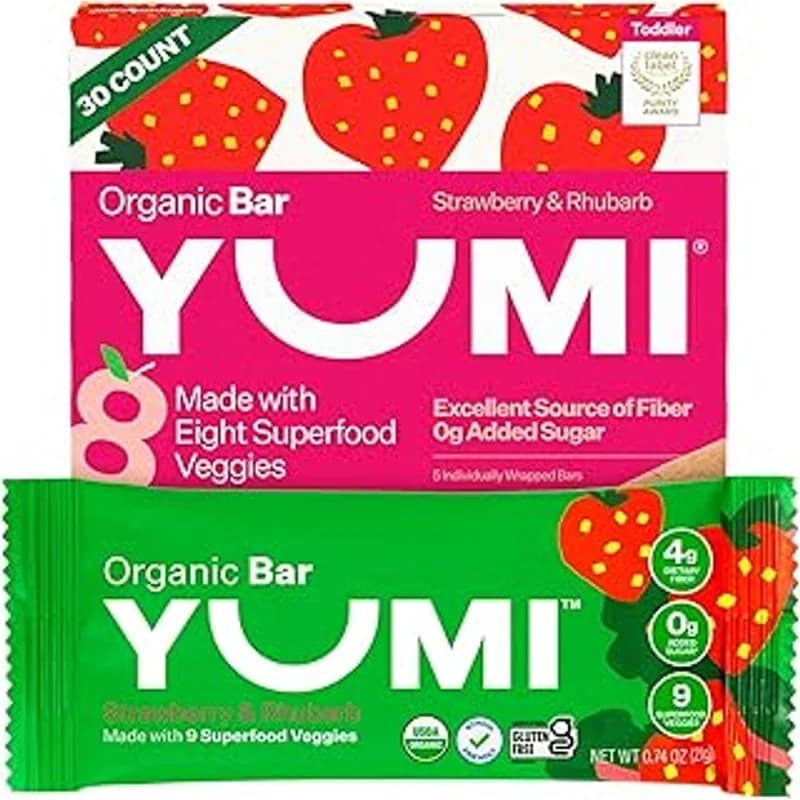
- Much cheaper than Yumi (~$1.33)
- Slightly more than conventional Gerber (~$0.45)
The $0.20/serving premium over conventional gets you organic certification and removes some concerning ingredients (non-organic pesticides, GMOs). Whether that's worth it depends on your priorities.
Availability Advantage
Gerber Organic is everywhere:
- Every grocery store
- Target, Walmart
- CVS, Walgreens
- Amazon
- Gas stations in some areas
You can find these at 2am if needed. No other organic baby puff matches this distribution.
Quality and Safety
Gerber conducts extensive testing for heavy metals and contaminants - a response to industry-wide concerns about baby food safety. Their testing protocols are publicly documented.
The puffs dissolve appropriately for baby self-feeding. Texture is consistent. Quality control is reliable.
Comparing to Other Organics
Versus Happy Baby: Happy Baby adds vegetables (kale, spinach) and uses apple juice concentrate instead of cane sugar. Happy Baby is slightly purer for $0.10 more/serving.
Versus Yumi: Yumi puts vegetables first and has no added sweeteners. But at 2x the price, Yumi serves families with higher ingredient standards AND budget flexibility.
Gerber Organic is the floor of acceptable organic baby snacks, not the ceiling.
Who Should Buy This
Budget-conscious families who want organic certification. Parents in areas without access to specialty brands. Those who value the reassurance of major brand testing and quality control. Families making the first step from conventional to organic.
Who Should Skip This
Families avoiding added sugars in baby food. Those concerned about "natural flavors" ambiguity. Parents willing to pay slightly more for Happy Baby's cleaner profile. Anyone prioritizing vegetables as primary ingredients.
The Verdict
Gerber Organic Puffs deliver USDA Organic certification at the lowest price point. For families where organic is the primary goal and budget is the primary constraint, these work. But the cane sugar and natural flavors prevent a strong recommendation - Happy Baby offers a meaningfully cleaner product for pennies more.